Atomic Insights #7: LinkedIn DM Follow-Ups in 2026 - What 8,349 Follow-Ups Taught Us (and Why Some Best Practice Advice Are Wrong)
We pulled the data on every message sent on Atomic BI.
32,384 messages. 8,349 follow-ups. 162 campaigns. 16 months.
(19,067 of these were messages to Singaporean prospects.)
A few things surprised us. Some confirmed what we already suspected. One in particular changed how we'll run our own outreach this quarter.
The numbers everyone asks about first:
- Cold first message reply rate on Atomic BI: 10.56%.
- Add follow-ups: 12.43%.
- The follow-up itself is worth ~2 percentage points across the platform.
That's the honest math. Follow-ups aren't the engine. Message one is. But two percentage points across 23,399 first messages is real pipeline being left on the table because we're not sending them.
If you're new here: this is Atomic Insights, practitioner notes from running a Singapore-based AI SDR platform. The first six issues covered the upstream work. Connections, comments, profile, SSI, Sales Navigator filters, Hyper-Personalised DMs.
You've built the list. Optimised the profile. Sent the first message.
This issue is about everything that happens after that.
1. THE 15,414 FORGOTTEN
The biggest leak in B2B outbound isn't bad follow-ups. It's no follow-up.
Across 23,399 first messages sent through Atomic BI, 15,414 got one message and then nothing. 65.9% of all platform outreach. The largest cohort in the dataset by a wide margin.
Where are those leads now?
99.73% of them are still sitting at "Sent" in the platform.
Not closed. Not marked uninterested. Not disqualified.
Forgotten.
At scale, industry benchmarks say 48% of reps never send a second message.
The math on what we left on the table:
- 13,328 leads still at "Sent" with no follow-up
- Platform FU1 reply rate: 5.34%
- That's roughly 712 conversations sitting unactivated
- At a ~21% positive-conversion-on-reply, that's ~150 INTERESTED leads we could surface by simply following up!
Here's the embarrassing part. We at Atomic BI use the platform every day. And we pulled the data and realised we weren't sending the volume of follow-ups our best customers were sending.
The people who built the system weren't running it like the people using it best.
That changes this month.
This matters beyond the math. 360Brew, LinkedIn's 150-billion-parameter AI model, evaluates conversation depth as a credibility signal. A message that never produces a two-way thread looks the same to the model as spam. A reply chain is one of the strongest credibility inputs you can generate.
Skip the follow-up, and you're not just missing the reply. You're handing 360Brew an empty signal.
Atomic Action Steps:
- Pull a list of leads still at "Sent" with no follow-up sent in 14+ days. Cap at 10 to start.
- Send a one-line check-in to each one today. Under 100 characters.
- Set a recurring 30-minute weekly slot to clear the silent queue. Don't let it grow.
2. THE 85/15 RULE: WHAT FOLLOW-UPS ACTUALLY DO
Here's what most outbound advice gets wrong about follow-ups.
The standard claim: 50-70% of replies come from follow-up messages. Send more touches, win more replies.
Our data tells a different story.
Of the 2,908 total replies on the platform:
- 2,472 came from message one alone (85.0%)
- 425 came after at least one follow-up (14.6%)
Message one carries the work. Follow-ups recover the rest.
But that 15% is not a reason to skip them. It's a reason to look at why it's that low.
Two reasons our follow-up share is artificially small:
First, our first-message reply rate is 10.56% on Atomic BI. The industry baseline for LinkedIn cold DMs is around 5%. We're double the floor on message one. That leaves less ground for a follow-up to recover.
(We're also incredibly proud of this data point - because that's exactly the problem we set out to solve when we launched.)
Second, 65.9% of our first messages never get a follow-up at all. The 15% lift is operating on a fraction of the eligible pool.
If platform-wide follow-up discipline matched our top user's at 46.2%, the share would be materially higher.
The honest framing:
Follow-ups recover ~2 percentage points on top of a strong first message. That's not a magic bullet. But two points across 23,399 messages is the difference between a quiet quarter and a real one.
360Brew tracks this too. A two-way DM thread is a heavier credibility signal than 50 likes on your last post. One reply earns more algorithmic trust than weeks of broadcast.
Atomic Action Steps:
- Track your first-message reply rate as the leading indicator. If it's below 8%, fix that before scaling follow-up volume.
- Don't expect follow-ups to save weak first messages. They recover ~2 points on a strong baseline, not 10.
- Measure your follow-up coverage (% of first messages that get at least one follow-up). That's the metric most teams ignore.
3. SHORT WINS. SHORT ALWAYS WINS.
The strongest finding in our entire dataset.
We looked at 8,344 follow-up messages by length bucket. The pattern is impossible to miss.
- Under 100 chars: 223 follow-ups → 18.83% reply rate
- 100-199 chars: 48 follow-ups → 16.67% reply rate
- 200-299 chars: 433 follow-ups → 11.32% reply rate
- 300-499 chars: 417 follow-ups → 6.95% reply rate
- 500-799 chars: 3,829 follow-ups → 7.16% reply rate
- 800+ chars: 3,399 follow-ups → 4.56% reply rate
A follow-up shorter than this paragraph performs four times better than one twice as long.
Replied follow-ups average 653 characters. Non-replied follow-ups average 758. Across 8,344 messages, the shorter ones win.
The "another value bomb" instinct is wrong.
Three real examples from our platform that worked, all replied to within 24 hours:
"Hey John, just checking in if you saw my previous message." (60 chars)
"Hi Nick, following up on the above, please take a look at our current Deck." (86 chars)
"Hi Michael, it's great to be connected. I was wondering if you'd any thoughts on the above?" (91 chars)
None of them re-pitch. None of them add a new value bomb. None of them apologise.
The high-volume openers in our data, the ones used 20+ times across campaigns, all underperformed. "Curious about that hyper-personalised..." was used 35 times. 2.9% reply rate.
Any opener used heavily becomes a dead template. The short, specific check-in wins.
Industry benchmarks back this up. Breakup messages reply at 15-30%. Our under-100-character bucket sits at 18.83%, squarely in that range.
360Brew also flags templated, formulaic messages more aggressively than specific short ones, because specific messages look like a human wrote them. Usually because a human did.
Atomic Action Steps:
- Cap every follow-up at 200 characters. If you can't, your message is a second pitch, not a follow-up.
- Default to one of three structures: short check-in, single sharp insight + soft out, or breakup.
- Delete the phrase "just wanted to bump this" from your team's vocabulary.
4. ONE DOES MOST OF THE WORK. BUT KEEP GOING TO FOUR.
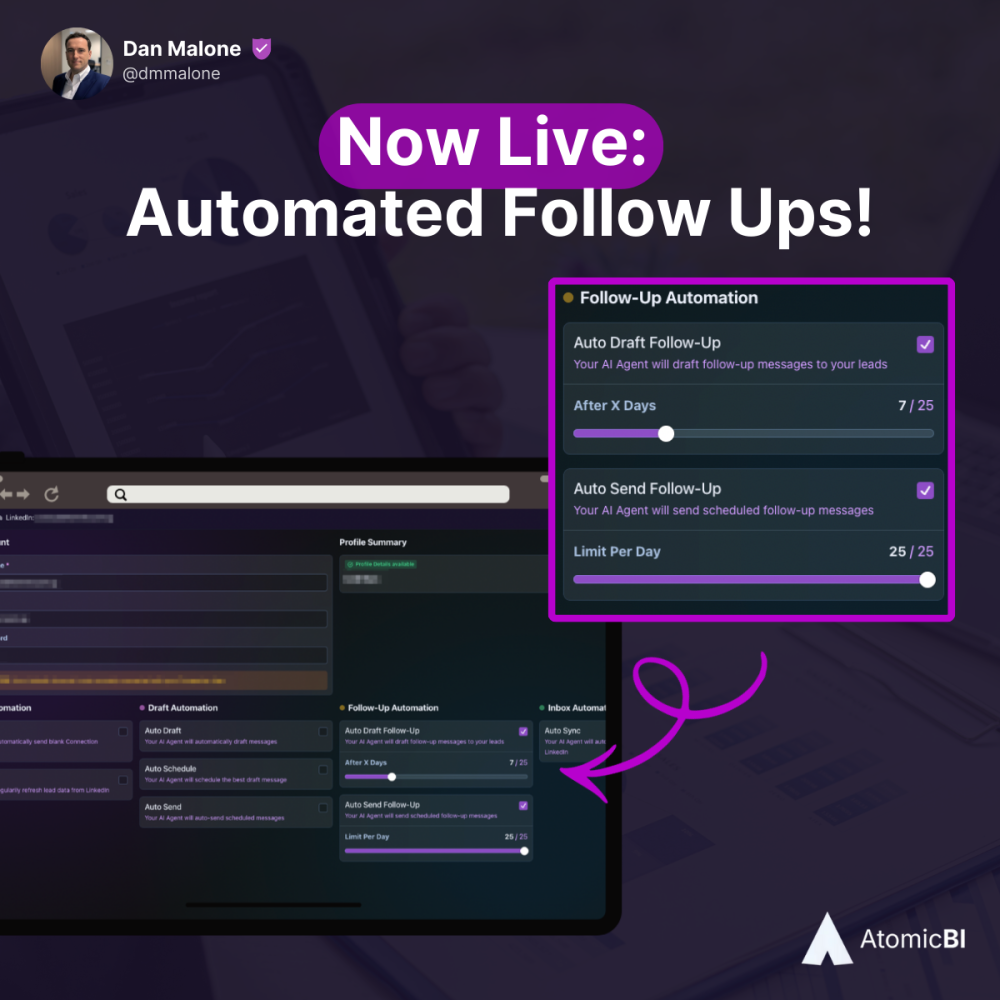 We released this feature back at the end of 2025 - it was one of my most favourite updates ever!
This is the most misunderstood part of follow-ups.
Most outbound advice says send 5+ touches. Our data says the line is at four.
- FU1 → 5.34% reply rate
- FU2 → 3.21% reply rate
- FU3 → 3.54% reply rate
- FU4 → 2.86% reply rate
- FU5 → 0 replies. Ever.
One follow-up does most of the work. FU1 alone recovers about 70% of all follow-up-attributable replies.
But that does not mean stop at one.
FU2, FU3, and FU4 each pull real pipeline at 2.86 to 3.54% reply rates. The conversations that start at FU3 or FU4 do not exist if you stop at FU1.
The line is at FU5. Zero replies, ever, across 13 platform attempts at FU5 or beyond. That is where it ends.
Cadence: 3-5 business days between touches. Tuesday, Wednesday, Thursday carry our follow-up volume. Weekends are dead, only 187 of 8,349 platform follow-ups went out Saturday or Sunday.
When a follow-up works, it works fast. Median time from a working follow-up to a reply on our platform: under 24 hours.
If a follow-up is going to land, it lands the same day they read it. If they ignored it for a week, the next one is not going to fix that.
VOICE NOTES AND VIDEO: ALTERNATIVE FORMATS
Text isn't your only format. Two heavily underused options sit right inside the LinkedIn mobile app.
Voice notes (up to 60 seconds, LinkedIn mobile app only) deliver a 30-40% reply rate uplift over text follow-ups in 2026. They bypass the text filter the rest of your inbox is fighting through. The human voice carries warmth no character count can.
Video messages (30-60 seconds, mobile or desktop) lift reply rates further but are best deployed after a connection accepts. They're more intrusive than voice, so use sparingly.
When to use each:
- FU2 (Day 10): voice note is the strongest pattern interrupt at this position. The specific trigger lands harder when the prospect hears your voice react to their post or company news.
- FU3 (Day 15): short video works here if you have a real resource to demo - a screenshot, a teardown, a one-pager. Voice still works for a quick check-in.
- Never on FU4: the breakup wants to be small and text-shaped. A voice breakup is louder than a text breakup. Keep it written.
Format rules:
- Voice: 30-45 seconds, conversational. First 5 seconds: name + specific reference.
- Video: 30-60 seconds, looking at the camera, daylight. First 5 seconds: same rule.
- Scripts kill both. If you can't sound natural, send text.
Voice and video work because most senders won't try them. That premium erodes the moment everyone does. Get there first.
Atomic Action Steps:
- Build the sequence as Day 1 first message, Day 5 FU1, Day 10 FU2, Day 15 FU3, Day 20 FU4. Stop after FU4.
- After FU4 with no reply, switch to passive engagement. Comment on their posts. Stop sending direct messages.
- Send Tuesday, Wednesday, or Thursday. Drop weekend touches entirely.
5. WHAT TO SEND AT EACH FOLLOW-UP
Same template across all four follow-ups wastes the touch. Each position has a different job.
Every pattern below stays under 300 characters, anchored to the 4x rule from Section 3.
FU1 - The Check-In (Day 5, target under 150 chars)
Job: re-surface the original message without restating it. Lowest-friction touch.
What works:
"Hey [Name], just checking in if you saw my previous message." (60 chars)
"Hi [Name], following up on the above. Curious if it landed." (60 chars)
"Hi [Name], any thoughts on the above?" (37 chars)
Reply rate: 5.34%.
Don't repeat the original ask. Don't "circle back." Don't apologise.
FU2 - The Specific Trigger (Day 10, target under 250 chars)
Job: reference something specific that's happened since message one. Their post. A company announcement. News in their market. Earns the right to be in their inbox a third time.
What works:
"Saw [Company] just announced [X]. Curious whether that changes how you think about [original topic]."
"Just read your post on [topic]. Sharpens the point I made in my last note."
Reply rate: 3.21%. The conversations that start here are usually the warmest.
Don't write "any update?" or "bumping this." Both read as automation.
FU3 - The Resource Drop (Day 15, target under 300 chars)
Job: give without asking. Send something genuinely useful (a one-pager, a case study, a teardown) with no CTA attached. The send earns goodwill, not a meeting.
What works:
"Not chasing a reply, just thought this might be useful given what you mentioned about [X]. Here's a one-pager on how [Customer] hit [number]. No need to respond."
Reply rate: 3.54%. Slightly higher than FU2 because the soft-out structure flushes out the genuinely interested.
Don't attach a meeting link to the resource. That collapses the goodwill.
FU4 - The Breakup (Day 20, target under 100 chars)
Job: close the loop. Tell them you're stopping. Open one door for them to walk back through if the timing is wrong.
What works (close to verbatim from our highest-performing campaigns):
"[Name], I'll leave it here for now. If [original problem] becomes a priority in the next quarter, my inbox is open."
"Last note from me. Happy to share what worked for [Customer] hitting [number] if it's useful. Otherwise, no worries at all."
Our under-100-character bucket, mostly breakups, replies at 18.83%. Highest reply rate of any length bucket on the platform.
Don't guilt-trip ("I guess this isn't a priority"). Don't make it sound like a final pitch. Don't write a paragraph.
The pattern summary:
- FU1 (Day 5, under 150 chars): check-in, no new ask
- FU2 (Day 10, under 250 chars): specific trigger, prove you're paying attention
- FU3 (Day 15, under 300 chars): resource drop, give without asking
- FU4 (Day 20, under 100 chars): breakup, close the loop
Atomic Action Steps:
- Write the four follow-ups before you send message one. Different jobs, different lengths.
- Use the breakup template from FU4 across at least 20% of your sequences this month. Measure the reply rate against your check-ins.
- Keep templates short, then customise per prospect. Anything used heavily becomes a dead template.
6. TWO CAMPS: EXECUTION DISCIPLINE BEATS TACTICS
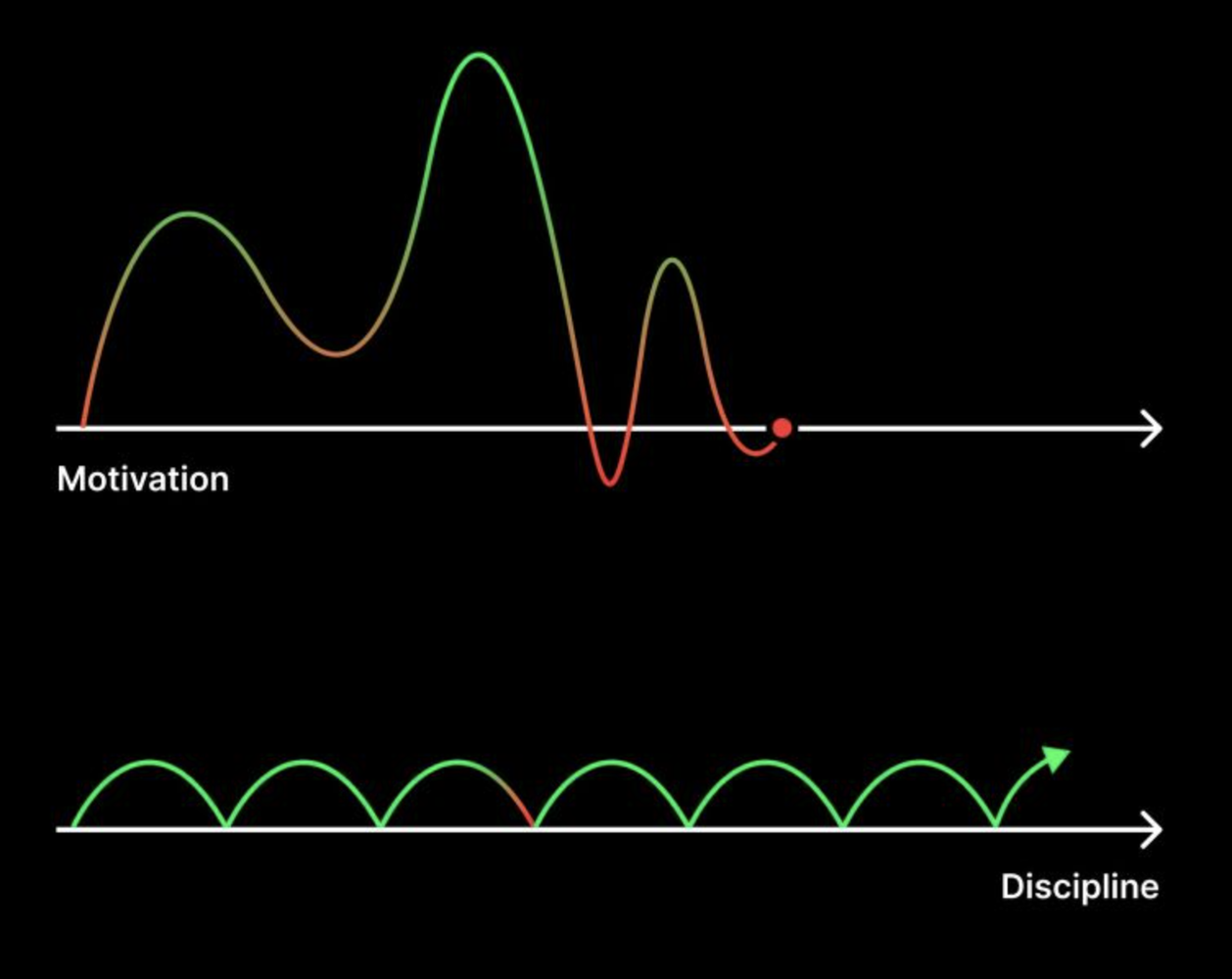
The customers winning on Atomic BI are not using better AI. They're not using different playbooks. Same product. Same human expert-in-the-loop review.
Different discipline on execution.
Two camps on the same platform.
Camp A: High-discipline customers (followed up on 38%+ of first messages):
- A venue operator in Singapore: 47.4% follow-up rate, 9.64% reply rate
- Funnel Cycle (Nicholas Eng): 46.2% follow-up rate, with 20% of all their replies coming from follow-ups
- A Funnel Cycle Client: 43.0% follow-up rate
- Filter: Scotland: 39.6% follow-up rate, 24.15% reply rate
- Scaling-Up Ventures: 39.0% follow-up rate, 18.36% reply rate
Camp B: Zero-discipline customers (under 10% follow-up rate):
- Several accounts at 0-2% follow-up rate, sitting at 1-3% reply rates.
Same product. Same AI. Different discipline.
The standout campaigns prove the ceiling:
Gary's January 2026 campaign on Filter: Scotland: 53 follow-ups, 19 replies. 35.85% reply rate.
Scaling-Up Ventures event promotion campaign: 112 follow-ups, 28 replies. 25.00% reply rate.
Not luck. Tight targeting plus disciplined follow-up plus short specific messages. The system delivers when the discipline is there.
And the human expert-in-the-loop is the quality gate that protects it.
Out of 389 AI-generated follow-up drafts in our newer workflow, humans approved and sent 121 (31.11%). Two in three drafts get rejected, edited, or quietly killed.
That 69% filter rate is the human expert doing the job. AI generates the draft. The human expert decides whether it ships. Quality compounds when both halves work.
Funnel Cycle's team didn't start at 46% follow-up rate. They got there. And the pattern across the high-discipline customers is the same. It isn't a new template or a smarter AI prompt. It's the recurring time slot to clear the silent queue.
(Shout out to Nicholas Eng ! Reach out to him if you ever need an effective, tightly-run team to take care of your B2B outreach.)
Discipline is the system.
If you run outbound, set a target. Measure it weekly. The discipline gap is bigger than the tactic gap.
Atomic Action Steps:
- Set a target follow-up rate for your team. Start at 40% within 14 days of the first message.
- Stand up a single weekly review slot. That's where discipline lives or dies.
- Run AI drafts through a human expert gate. Expect to reject 60-70%. The filter is the value.
FREQUENTLY ASKED QUESTIONS
How many LinkedIn follow-ups should I send in 2026?
Send up to four. After that, stop and switch to passive engagement on the prospect's content. On Atomic BI, FU1 replies at 5.34%, FU2 at 3.21%, FU3 at 3.54%, FU4 at 2.86%, and FU5+ at 0% across 13 platform attempts. The diminishing return is real but stays positive through FU4.
How long should a LinkedIn follow-up message be?
Under 200 characters. Follow-ups under 100 characters reply at 18.83%. Follow-ups over 800 characters reply at 4.56%. That's a 4x difference across 8,344 messages on our platform. The shortest format wins consistently.
How long should I wait between LinkedIn follow-ups?
3 to 5 business days. The full sequence: Day 1 first message, Day 5 FU1, Day 10 FU2, Day 15 FU3, Day 20 FU4. Send Tuesday, Wednesday, or Thursday. Skip weekends.
What is the single biggest mistake B2B sales teams make on LinkedIn follow-ups?
Not sending them. Across 23,399 first messages on Atomic BI, 65.9% never got a follow-up. 99.73% of those silent leads are still sitting at "Sent" in the platform. Forgotten, not closed.
Why does industry advice say 5+ follow-ups when your data says four?
The "5+ touches" benchmark comes from full sales cycle data across all channels. For LinkedIn DM specifically, our platform shows zero replies past FU4. Channels behave differently. Stop at four.
COMPLETE THIS WEEK:
- Pull every lead at "Sent" with no follow-up sent in 14+ days. Send a one-line check-in to ten of them.
- Set a target follow-up rate for your team. Start at 40%.
- Write the four follow-up templates (check-in, specific trigger, resource drop, breakup) before your next campaign launches.
- Cap every follow-up at 200 characters.
- Stand up a weekly 30-minute review slot to clear the silent queue.
Follow-ups aren't the engine. Message one is. But the 15% follow-ups recover is real pipeline, and most of it is being left on the table because we're not sending them.

Want to see how AI-powered LinkedIn outreach actually works - with 13-27% response rates and messaging that sounds like you, not a bot? Book a call and we'll show you.